

Building Bonds Between Fathers and Children with Autism
By Donna Richards, Autism Family Circus
In most families, mothers often become the default caregivers — scheduling therapies, handling IEP meetings, managing daily routines, and advocating tirelessly for their children. We’re the organizers, the encouragers, the comforters, and sometimes the emotional translators between our child and the world.
But as mothers of children with autism, we also know something else: our kids need their fathers just as deeply. Those father-child bonds can become an anchor — steady, grounding, and uniquely powerful. Yet, when moms do most of the hands-on caregiving, it can be hard to figure out how to help that relationship bloom.

Why Dad’s Connection Matters
Fathers often bring a different kind of energy — calm, focused, and less verbal — which can be a natural fit for many children on the spectrum. Dads can model patience, independence, and confidence in ways that help their children stretch their comfort zones. When a father takes the time to connect, even in small ways, it builds trust, reduces anxiety, and helps the child see himself or herself through another loving lens.
The key isn’t trying to “match” mom’s nurturing style. It’s giving Dad space to connect in his own authentic way.
Step One: Start with Shared Interests
Connection begins where interest lives. That’s what happened with my son, Chef Justin, and his father, John. Over time, they discovered that their relationship didn’t need to look like anyone else’s — it just needed to belong to them.

They began spending time together doing things they both enjoyed:
- Fishing — The quiet rhythm of casting a line became their shared language. No pressure to talk, just the sound of the water, a few snacks, and the reward of a patient wait. Fishing gave Justin a peaceful place to connect without sensory overload.
- Glassblowing — This one surprised us all! The bright colors, heat, and creativity of the glass studio became a space where Justin could focus deeply. John stood beside him, guiding when needed but mostly observing, encouraging, and celebrating each creation.
- Lunch Together, Just the Two of Them — Once a week, no matter how busy life gets, John and Justin have “their lunch.” Sometimes it’s a favorite diner, sometimes a sandwich on the lake. The food isn’t what matters — it’s the ritual of showing up, of time reserved just for them.

These little traditions built layers of trust and companionship. They weren’t forced or elaborate — just consistent, quiet, and meaningful.
Step Two: Let Dads Learn Their Own Way
As moms, we often want to hand over a list of do’s and don’ts when Dad steps in. But sometimes, the best gift we can give is a little room. Dads may connect differently — fewer words, more activity. And that’s okay.
It’s not about perfection. It’s about presence. Fathers don’t need to know every therapy term or strategy to make a difference. They just need to show up — again and again — in a way their child can count on.
Step Three: Celebrate Their Wins
When we see Dad and our child laughing together, building something, or just enjoying each other’s company, it’s a reminder that love looks different in every family — and that’s beautiful.
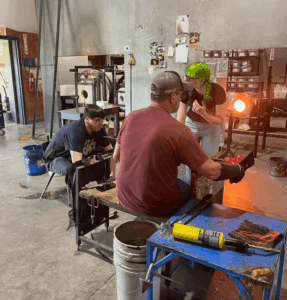
A father’s steady presence helps a child with autism feel safe in a world that often feels unpredictable. Those moments, whether it’s a shared meal or a fishing trip, say, “You’re important to me.” And that message, spoken or unspoken, can shape a lifetime.
Final Thoughts
We mothers will always carry much of the caregiving load, but when fathers build their own unique bonds, it brings balance and strength to the whole family. Watching John and Justin together reminds me daily that love doesn’t always need words — sometimes it’s found in a fishing pole, a piece of glowing glass, or a quiet booth at lunch for two.